

Mutual Funds vs Real Estate: Best Investment Options for NRIs
Read More
_1772023637933.webp&w=3840&q=75)
When we talk about cross-border money lending, there is one common question that every NRI and OCI ends up asking: Can NRIs give loans to Indian Residents or Firms?. Well, the answer is yes. NRIs, both individuals and companies, can end monetarily to resident Indian subject to specific considerations under the RBI regulations, Foreign Exchange Management Act (FEMA), and the Income Tax Act.
In this blog, we will examine in detail the rules, limits, considerations, and reporting requirements for lending to Indian residents, companies, and NRIs.
NRIs can provide loans in Indian rupees (INR) to residents of India. However, NRIs must adhere to the following conditions:
The NRI must transfer the loan amount via:
NRI can provide a loan for a maximum period of three years.
The interest rate on loans provided by NRI cannot exceed 2% above the prevailing bank rate on the date the loan is granted to the resident Indian.
Indian residents who have taken a loan from an NRI can repay the loan and the interest only into the lender's NRO account.
A Tip For NRIs: Always draft a clear loan agreement under FEMA with professional assistance. This ensure 100% tax compliance.
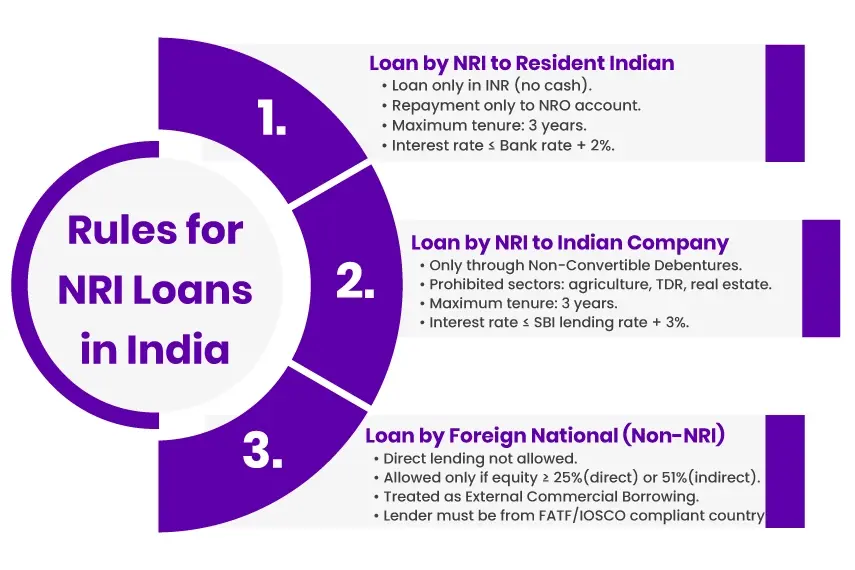
NRIs can lend loans to Indian firms and companies in INR either on a repatriable or a non-repatriable basis. However, while lending the loan, the following strict conditions apply.
NRI cannot lend loan to any Indian company engaged in the following prohibited sectors.
For NRI loans to Indian companies, the interest rate cannot exceed 3% above SBI's lending Rate.
NRIs can provide loans to Indian companies for up to 3 years. Meaning the loan shall be repaid only after three years from the date of borrowing.
Loan on a repatriable basis: The NCD allotment to NRIs must not exceed the FDI ceiling.
Loan non-repatriable basis: The loan proceeds must be received via inward remittance or debited to the NRE/NRO account. Ensure that the repayments can only be made to the NRO account.
Within 30 days of receiving the loan receipt, the company should submit the report to the RBI containing.
Henceforth, the company cannot take loans from its NRI lenders casually; they must issue NCDs and must follow RBI-prescribed procedures.
Foreign individuals who are not OCIs or NRIs cannot directly lend money to an Indian company.
Foreign individuals can do so only under the following circumstances.
Loans given under these circumstances fall under the category of External Commercial borrowing (ECBs), permitted only if the lender is a resident of a FATF or IOSCO-compliant country.
Plan your investments in India more effectively with Savetaxs Expert Support for NRIs.
NRIs lending loans to Indian residents and companies is perfectly legal, but only when you are on the right side of the rule book. Both the lending and borrowing of funds are regulated under the regulatory framework of the Ministry of Finance and the Reserve Bank of India.
For NRIs seeking professional consultation on which type of loan can be provided by an NRI, Savetaxs is the name to trust. Our experience furthermore assists in explaining the procedure on how NRI can lend a loan to Indian residents and firms in compliance.
Connect with us as we serve our clients 24/7 across all time zones.
Note: This guide is for information purposes only. The views expressed in this guide are personal and do not constitute the views of Savetaxs. Savetaxs or the author will not be responsible for any direct or indirect loss incurred by the reader for taking any decision based on the information or the contents. It is advisable to consult either a CA, CS, CPA or a professional tax expert from the Savetaxs team, as they are familiar with the current regulations and help you make accurate decisions and maintain accuracy throughout the whole process.
Want to read more? Explore Blogs

_1767955810.png&w=828&q=75)

_1768221427.webp&w=828&q=75)