
What is an S corp - Overview, Taxes and How To File
Read More
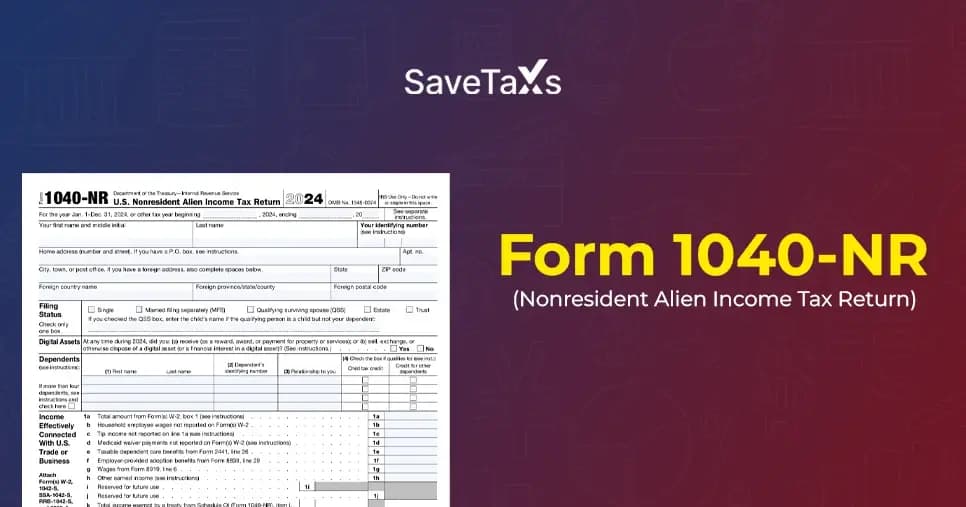
Nonresident aliens use Form 1040-NR to file their U.S. income tax return. An individual is considered a U.S. nonresident alien if they do not have a green card and have not passed the substantial presence test (with certain visa-based exceptions such as F, J, M, or Q visa holders).
If you are a nonresident alien working in the United States or earning U.S.-sourced income, you must file taxes using Form 1040-NR.
For non-resident aliens, it is essential to file Form 1040-NR and comply with U.S. tax laws, especially where visa compliance is concerned. Filing Form 1040-NR is also required if you want to claim a tax refund for overpaid withholding taxes.
Similar to other tax forms, Form 1040-NR requires you to provide your personal information, including your name, address, and identifying number.
If eligible, individuals must enter their Social Security Number (SSN). If they do not qualify for an SSN, they must apply for and use an Individual Taxpayer Identification Number (ITIN).
You can use Form 1040-NR to report your U.S.-sourced income, including:
In some cases, nonresident aliens may also claim benefits under an applicable U.S. tax treaty, which may reduce or eliminate certain tax liabilities.
Filing IRS Form 1040-NR and understanding U.S. taxation as a non-resident alien can be overwhelming and complicated, especially when you are not familiar with IRS rules and regulations.
Well, not anymore. At Savetaxs, we assist you in filing your Form 1040-NR with expert guidance and accuracy.
Our experts have been assisting clients with U.S. tax services for over a decade, and our satisfied client base is a testament to the high quality of services we provide. Connect with us — we offer our services 24/7 across all time zones, no matter where you are in the world.
Note: This guide is for information purposes only. The views expressed in this guide are personal and do not constitute the views of Savetaxs. Savetaxs or the author will not be responsible for any direct or indirect loss incurred by the reader for taking any decision based on the information or the contents. It is advisable to consult either a CA, CS, CPA or a professional tax expert from the Savetaxs team, as they are familiar with the current regulations and help you make accurate decisions and maintain accuracy throughout the whole process.

Mr Shaw brings 8 years of experience in auditing and taxation. He has a deep understanding of disciplinary regulations and delivers comprehensive auditing services to businesses and individuals. From financial auditing to tax planning, risk assessment, and financial reporting. Mr Shaw's expertise is impeccable.
Want to read more? Explore Blogs
You are required to file Form 1040-NR if you are a non-resident alien who:
You can report U.S.-sourced income, such as