
Things NRIs Should Consider While Investing in India
Read More
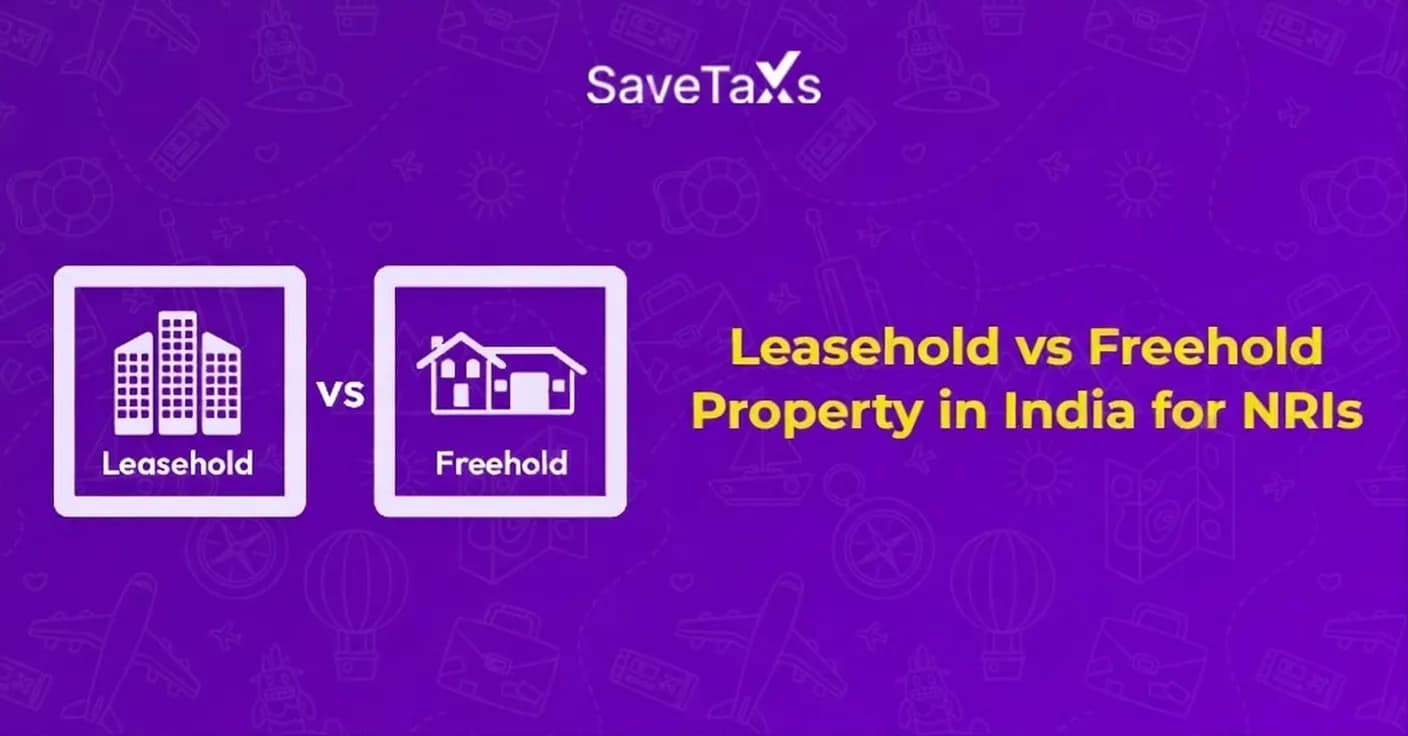
When investing in Indian real estate, you often hear about leasehold and freehold properties. The key difference between leasehold and freehold properties is the issues associated with ownership and land control. For NRIs, understanding the Indian property structure is vital for making informed investment decisions. It impacts their investment stability, legal position, and market value.
Further, to help you out, this blog provides you with complete information on leasehold and freehold property types in India for NRIs, along with their key factors. So read on and clear all your doubts related to it.
A freehold property can be defined as a type of ownership where you have complete and absolute rights over the property and the land without any restrictions. It means that the property owners own the land and any structure on it, free from obligations or restrictions to a higher authority, including government or a leaseholder.
Once bought, the property is yours outright for life. You can sell it, mortgage it, renovate it, or pass it on to your next generation without requiring permissions from the land authority or paying any lease-related charges.
Examples of freehold properties include open land plots, independent houses, bungalows, villas, and certain types of commercial buildings. Further, let's know the advantages of freehold property.
The advantages of freehold property are as follows:
In India, many prime locations have freehold property markets that attract both Indian residents and NRIs. Considering this, you can find commercial and residential property in Mumbai, Pune, Delhi, Chennai, and Bengaluru. Additionally, the growing markets of Noida, Hyderabad, and Gurgaon also attract investors. It is because they offer investment potential and developed infrastructure.
Apart from this, freehold properties are a lucrative and safe option for NRIs seeking to invest in Indian real estate, as they provide growth and long-term financial security.
This was all about freehold property, its benefits, and its popular locations in India. Moving ahead, let's know about leasehold property.
A leasehold property is one where another party owns the property, generally a development authority or government, and the buyer, for a predetermined lease period, gets the right to use it. It is like without owning the land, having a house for a fixed time period. The leasehold premise eventually belongs to the original owner of the property.
Considering this, as a tenant, you need to pay the service, ground rent, and maintenance charges to the lessor and at lease expiry return the property. Additionally, the lease duration may vary from 30 to 999 years. Moreover, the longer the tenure period, the higher the value of the property.
Further, the common examples of leasehold properties are builder floors in metro cities, commercial spaces within leasehold zones, and apartments built on government-leased land. Now, let's know about the advantages of leasehold property.
Advantages of Leasehold Property
The advantages of leasehold property are as follows:
Popular Leasehold Property Locations in India
The popular leasehold property locations in India include Mumbai, Navi Mumbai, Noida, Delhi, and Gurgaon. These locations have effective connectivity standards and excellent infrastructure, combined with large opportunities of investments. Further, it enables investors and NRIs to successfully use the leasehold properties.
Additionally, NRIs who are looking for affordable real estate investment in India should opt for leasehold properties for their needs, specifically in area having high demand.
So, this is what a leasehold property is, its benefits, and its prime location. Moving further, let's do a comparative analysis of both properties to gain a better understanding.
The table below showcases the comparative analysis of leasehold and freehold property. Read on and clear all your doubts about both property types.
| Factor of Comparison | Freehold Property | Leasehold Property |
|---|---|---|
| Period of Owner Possession | This property type offers complete ownership rights to the holder of both the building and the land that can be extended forever. | You can extend the ownership period of leasehold properties to 99 years. However, it remains under the control of both parties, i.e., the tenant and property owner, for this duration until the ownership power is resumed by the landowner. |
| Ease of Transferability and Resale Value |
Regarding property resale value and transferability, freehold properties offer great prospects. Additionally, these properties consist of an increased transability. It is because, as per the will of the owner, it can be sold easily. Also, more buyers are attracted to the extended property ownership. |
Leasehold properties face issues in resale. It is because, generally, the potential buyers doubt the restricted tenure duration, which impacts the market value of the property. |
| Legal Aspects | The rights of the owner in this property type are simpler. Considering this, the property acquisition of NRIs in freehold properties becomes simple since they get better financing options. |
Compared to freehold property ownership, getting leasehold ownership is challenging. It is because it includes, following land property rules, lease renewals and lease term adjustments. Further, being an NRI, living outside India, you might find this process difficult. |
Moreover, NRIs and investors who want to invest in Indian real estate should understand the fundamental differences between freehold and leasehold property. Moving ahead, now let's look at the factors to consider when choosing between these two properties.
While investing in the Indian real estate market, NRIs, along with their financial goals and long-term life plans, should consider the following factors:
The decision of choosing between freehold and leasehold properties depends on whether you have short-term or long-term investment goals. If you opt for long-term investment goals, choose freehold properties as these provide stability and superior results. These property types offer permanent ownership to you to over time develop your assets without worrying about the lease expiration.
In contrast, leasehold properties are a good investment option for short-term objectives as these have limited time ownership. However, the limited ownership in leasehold properties reduces their extended growth opportunity. Though for short-term investors, leasehold properties are beneficial as they offer them a reduced initial purchase price.
File your NRI taxes easily with expert guidance of Savetaxs from the comfort of your home at anytime and from anywhere.
The decision completely depends on the available funds during the investment. At the initial level, for freehold properties, you need a greater investment since their perpetual ownership as in this there is no end date of ownership. For some buyers, limited investment funds create hurdles to acquiring property, specifically for those who have a tight budget.
Generally, people who are interested in leasehold properties pay less for the purchase, since the ownership right is provided for a limited time. Additionally, with the resale value depreciation, it is vital to understand the renewal expenses.
NRIS needs to understand the laws and regulations which througout India govern property ownership. Considering this, under freehold properties, the ownership process is straightforward. However, in the case of leasehold property, you need detailed agreements about land-specific rules and renewal conditions. For instance:
Additionally, it is advisable to take professional legal advice before investing in the real estate market of India. It is because such advice prevents potential complications with Indian property regulation with correct compliance.
So, these were some of the factors that you need to consider when choosing between leasehold and freehold property. Moving further, let's know how an NRI can convert a leasehold property into a freehold property.
If an NRI has a leasehold property in India, he/she only convert it into a freehold property if the lease terms and rules of the local authority allow. Considering this, the conversion process mainly depends on who controls/ owns the land, i.e., a private owner or a government official. Let's understand this in detail.
If the leasehold property is owned by an authority like NOIDA/ DDA/ HUDA/ CIDCO, a state development authority, the property conversion can be done through the official Freehold Conversion Scheme. For this, NRIs need to follow the mentioned process:
If the lease is signed between private parties, the property conversion process is not automatic and generally depends on the lease deed. Considering this, before applying for the conversion process, NRIs should check whether the lease deed allows transfer of ownership or not. In case it allows, the lessor (land owner), through a conveyance deed like a normal property purchase or proper sale can transfer ownership. Here is how they can do so:
Further, private lease conversions depend on the terms and conditions of the contract. Considering this, in every case, it is not a fixed "sale agreement." Additionally, NRI can complete the complete provision conversion process through POA. However, it should be executed:
This was all about how NRIs can convert leasehold property into freehold property in India. Moving ahead, let's know which property option is the correct one for NRI investors.
With Savetaxs, resolve all your doubts, and choose the right investment as per your financial needs and investment goals.
Choosing between freehold property and leasehold property completely depends on the investment goals and financial conditions of an NRI. Freehold properties are good options for individuals who have substantial funds. Additionally, those who are looking for lifetime property ownership and like to purchase property in India for both present and future use. They are those NRIs who are seeking long-term investment in their capital base.
In contrast, leasehold properties are ideal options for individuals who have limited financial options and short-term investment goals. This property type is a good fit for NRIs who, while maintaining home ownership, want to earn rental income.
So, it completely depends on the investment goals and financial situation of an NRI when choosing between freehold and leasehold property in India.
Lastly, when it comes to leasehold vs freehold property in India for NRIs, the choice depends on their needs, investment goals, and priorities. For this, there is no universal answer as to which option is the best for them. In this, what matters the most is your ownership intention, investment plans, and financial readiness.
Further, if you are confused between leasehold and freehold property for investment in India, connect with Savetaxs. Our experts will resolve all your doubts and help you choose the right investment option as per your financial needs and investment goals. Additionally, they will also assist in ensuring you have all the required documents for investments.
Note: This guide is for information purposes only. The views expressed in this guide are personal and do not constitute the views of Savetaxs. Savetaxs or the author will not be responsible for any direct or indirect loss incurred by the reader for taking any decision based on the information or the contents. It is advisable to consult either a CA, CS, CPA or a professional tax expert from the Savetaxs team, as they are familiar with the current regulations and help you make accurate decisions and maintain accuracy throughout the whole process.

Mr Manish is a financial professional with over 10 years of experience in strategic financial planning, performance analysis, and compliance across different sectors, including Agriculture, Pharma, Manufacturing, & Oil and Gas. Mr Prajapati has a knack for managing financial accounts, driving business growth by optimizing cost efficiency and regulatory compliance. Additionally, he has expertise in developing financial models, preparing detailed cash flow statements, and closing the balance sheets.
Want to read more? Explore Blogs