

How to Respond to Notice Under Section 143(2)?
Read More
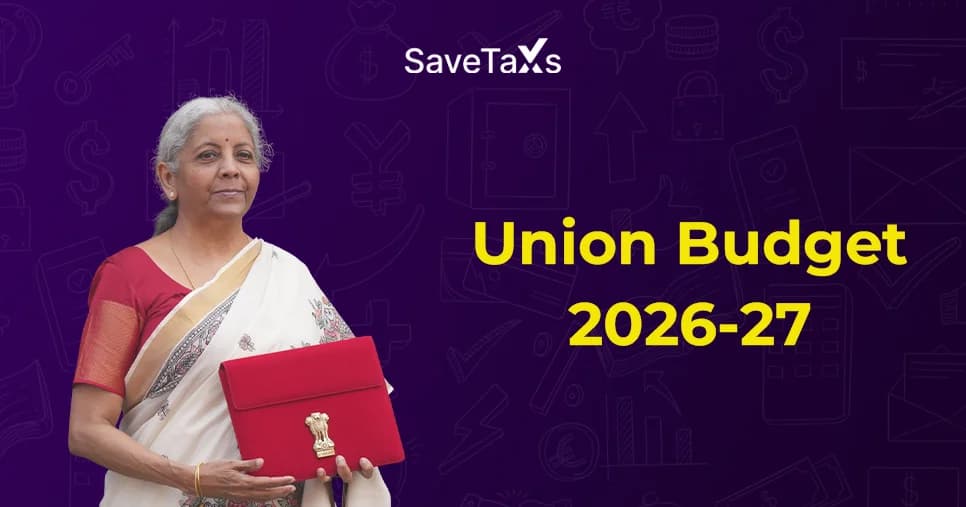
India's Finance Minister Smt. Nirmala Sitharaman presented the Union Budget 2026-27 on Sunday Feb 1, 2026. The budget proposed a range of financial measures that affect NRIs and other overseas individuals by simplifying property compliance and expanding NRIs' access to the Indian equity market.
The key wins in the budget for NRIs include eased property TDS, LRS TCS cuts, and greater flexibility in foreign asset disclosure, which largely enhance repatriation and reduce litigation for cross-border families.
The recent budget 2026 adopts a continuity-driven approach for NRIs and individual taxpayers. Meaning there are no changes to the income tax slab rates or the NRI residency definition under the Income Tax Act.
The 2026 budget proposes an innovative approach, rather than introducing structural tax changes. It focuses on simplifying the process, improving coordination among regulatory bodies such as SEBI and RBI, and making NRI compliance easier to enhance transparency and build confidence among individuals.
Reduced TCS Under The Liberalized Remittance Scheme (LRS): The new budget rationalizes taxes collected at source on overseas remittances, especially those made for medical or educational purposes. This helps NRIs in many unforeseen ways by easing cash-flow pressure on families sending funds abroad by reducing upfront tax outlays.
Simplified TDS Compliance for NRI Property Sales: To simplify procedural burdens, the budget allows PAN-based TDS deduction for NRI property transactions by eliminating the requirement to obtain a Tax Deduction and Collection Account Number (TAN). This one move has primarily made compliance easier for buyers and sped up property transactions involving NRIs.
Expanded Investment Access For NRIs & OCIs: This key focus area of Budget 2026 could be NRIs' favorite, as it expands investment limits for NRIs and Overseas Citizens of India in listed Indian companies. This encourages the greater participation of NRIs in the Indian equity market.
In a nutshell, the Union Budget 2026-27 established a facilitative, tax-friendly framework for NRIs by proposing seamless capital movement, operational ease, and improved access to investment in the Indian market, without altering tax rates or residency rules.
Expert-led. Accurate. On time.
The core NRI rules in the Union Budget remain unchanged. Here is some important guidance NRIs should take away from Budget 2026.
As aforesaid, the budget continues to operate under the existing tax framework; hence, the tax framework for virtual digital assets and cryptocurrencies remains unchanged. There are no new restrictions or classifications, despite ongoing global discussions about market volatility and crypto regulations.
Implications For NRIs
In Schedule VDA, NRIs must continue to report VDA transactions when filing their ITR in India. Ensure that this is only for traded executions on Indian exchanges or wherever the income has an Indian nexus.
Virtual digital services held or traded without any Indian connection remain outside the scope of taxation in India.
This continuity provides clarity and stability for NRIs engaged in crypto investments linked to India.
The budget confirms there are no adverse changes to capital taxation on foreign assets. The holding periods, tax rates, and classification of long-term gains and short-term gains remain unchanged.
However, a significant procedural relief has been introduced: the timeline for revising Income Tax Returns (ITRs) has been extended up to March 31, subject to a nominal fee. This extension of time is beneficial for NRIs who face delays in receiving their transaction statements, or finalizing capital gains calculations, specifically in cases involving.
Furthermore, this extended revision window helps NRIs correct their disclosures, recalculate capital gains, and avoid penalties, ensuring seamless post-filing compliance.
Here is a major win for NRIs: buyers of immovable property above Rs 50 lakh can deduct TDS using the resident buyer's PAN. Now, there is no specific requirement for a TAN under Section 195.
This refinement has effectively eliminated the old hassle of buyers needing TAN, which unnecessarily delayed deals.
But now the procedure has been streamlined, and the TDS rate remains 20% for long-term capital assets. And yes, Form 13 still helps NRIs reduce TDS if the seller qualifies.
The following are some investment-related budget announcements relevant to NRIs investing in India.
The portfolio investment scheme is on the rise, with the NRI/OCI cap increased from 5% to 10% per company. more the agreement limit to 24% from 10%, however, it is subject to the RBI notification and the company approval. This enables direct exchange investments without the FPI route, repatriation/non-repatriation via designated banks.
There are no new NRI curbs; the IFSC gift city funds promoted a tax-efficient way for offshore mutual fund investors to mimic Indian schemes.
The PAN-TDS eases buyer compliance, but the NRI real estate sector purchase restrictions are not relaxed; for example, agricultural land sale limits persist.
Savetaxs helps you choose smarter investment options.
In a nutshell, the Union Budget 2026-27 is a stability-focused and compliance-friendly budget for NRIs. Rather than running a structured framework and altering tax rates or residency definitions, it focuses directly on simplifying procedures, easing remittance-related taxes, improving compliance for NRI property transactions, and expanding investment opportunities.
For NRIs seeking complete guidance on Budget 2026, Savetaxs is the name to trust. Our NRI tax experts will help you understand what's best suited for you in the recent budget.
Connect with us as we serve our clients 24/7 across all time zones.
Note: This guide is for information purposes only. The views expressed in this guide are personal and do not constitute the views of Savetaxs. Savetaxs or the author will not be responsible for any direct or indirect loss incurred by the reader for taking any decision based on the information or the contents. It is advisable to consult either a CA, CS, CPA or a professional tax expert from the Savetaxs team, as they are familiar with the current regulations and help you make accurate decisions and maintain accuracy throughout the whole process.

Mr. Ritesh has 20 years of experience in taxation, accounting, business planning, organizational structuring, international trade financing, acquisitions, legal and secretarial services, MIS development, and a host of other areas. Mr Jain is a powerhouse of all things taxation.
Want to read more? Explore Blogs
_1760618042.webp&w=828&q=75)