_1759750925.webp&w=828&q=75)
What Is The Difference Between a 1099 and a W-2 Tax Forms
Read More
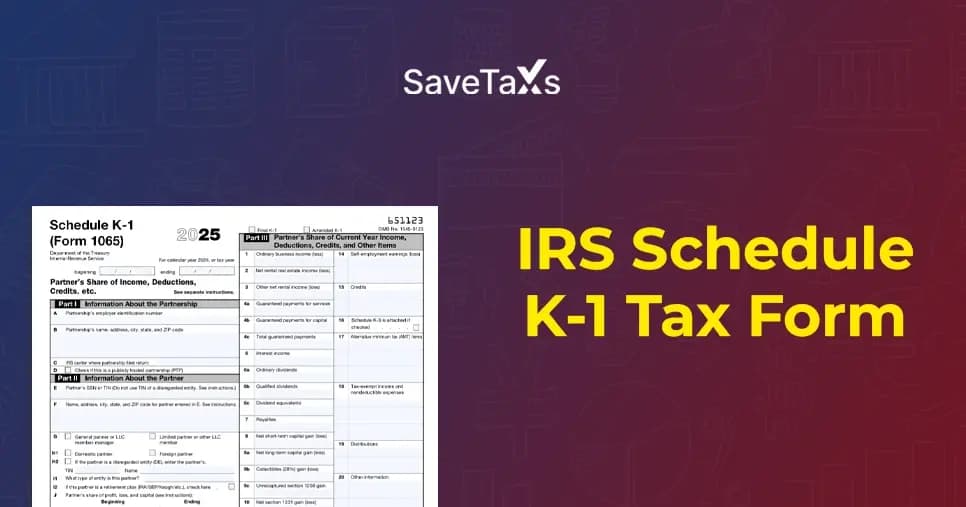
Schedule K-1 is a U.S. federal tax document used to report income, losses, deductions, and credits passed through to individuals who have an ownership interest in a pass-through entity. These entities include partnerships, S corporations, trusts, and estates.
Each partner, shareholder, or beneficiary receives a Schedule K-1 detailing their share of the entity’s taxable activity. The recipient then uses this information to report income on their individual tax return.
A Schedule K-1 is essential under the U.S. tax system for entities that use pass-through taxation. Instead of the entity paying income tax, the tax obligation passes to the individuals who benefit from the income.
The Schedule K-1 serves as a reporting document that allocates each person’s share of income, losses, deductions, and credits based on their ownership interest in the entity.
Let’s have an overview of the Schedule K-1 form:
A partnership is formed when two or more individuals agree to operate a business together. The terms are defined in a partnership agreement, which determines how profits, losses, and capital are allocated among partners.
The allocation rules in the partnership agreement directly impact the amounts reported on each partner’s Schedule K-1.
Schedule K-1 requires partnerships to track each partner’s tax basis, which represents their ownership investment in the business.
A partner’s basis:
Example:
If a partner contributes $50,000 in cash and $30,000 in equipment and is allocated $10,000 of income, the partner’s basis becomes $90,000, reduced by any distributions taken.
Maintaining accurate basis is critical because losses and distributions generally cannot exceed the partner’s basis. Basis information typically appears in the capital account analysis section of Schedule K-1.
Schedule K-1 can report multiple types of income, including:
Some partnerships also provide guaranteed payments to partners who actively manage the business. These payments are reported separately on Schedule K-1 and are generally subject to self-employment tax.
Although Schedule K-1 forms differ slightly depending on the entity type, their purpose remains the same: to report pass-through tax items to individuals and the IRS.
Note: If a Schedule K-1 contains errors, recipients should request a corrected K-1 from the issuing entity before filing their return.
Only pass-through entities are required to prepare and issue Schedule K-1 forms. Individual taxpayers do not file K-1s themselves but must report the information on their tax returns.
Entities required to issue Schedule K-1 include:
Recipients typically include:
Partnerships do not pay income tax directly. Instead, each partner reports their share of taxable income, losses, deductions, and credits using the Schedule K-1 prepared from Form 1065.
Example:
If a partnership earns $100,000 in taxable income and has four equal partners, each partner receives a Schedule K-1 reporting $25,000 of income.
LLCs are generally treated as pass-through entities unless they elect otherwise.
S corporations file Form 1120-S and issue Schedule K-1s to shareholders. These forms report each shareholder’s share of income, losses, deductions, and credits, which must be included on their individual tax returns.
Trusts and estates file Form 1041. Some income may be taxed at the entity level, while distributed income is passed through to beneficiaries via Schedule K-1.
When income is distributed:
Schedule K-1 contains three main sections:
This section contains details about the entity, including the Employer Identification Number (EIN), address, tax return filing information, and publicly traded partnership status.
This section focuses on the partner, shareholder, or beneficiary. It includes their Social Security Number (SSN), address, role in the entity, and capital account details reflecting contributions, profits, losses, and distributions.
This section lists the recipient’s share of income, deductions, credits, and other relevant tax information that must be reported on their tax return.
Whether Schedule K-1 income is considered earned income depends on involvement:
Schedule K-1s are typically due by March 15, or the 15th day of the third month after the entity’s tax year ends. Delays are common and may affect when individuals can file their personal tax returns.
Schedule K-1 forms are often received later in the filing season. The IRS requires them to be issued by March 15, or by the 15th day of the third month following the end of the entity's tax year.
Most guidance suggests recipients should expect to receive their K-1s by mid-March or shortly thereafter, depending on processing timelines.
Schedule K-1 is an important tax document for individuals involved in pass-through entities. It reports income, losses, deductions, and credits that must be included on personal tax returns. Understanding how to read and report Schedule K-1 correctly helps avoid filing errors and potential IRS notices.
If you need professional assistance, Savetaxs provides expert tax support to help you accurately report Schedule K-1 income and comply with current tax laws.
Note: This guide is for information purposes only. The views expressed in this guide are personal and do not constitute the views of Savetaxs. Savetaxs or the author will not be responsible for any direct or indirect loss incurred by the reader for taking any decision based on the information or the contents. It is advisable to consult either a CA, CS, CPA or a professional tax expert from the Savetaxs team, as they are familiar with the current regulations and help you make accurate decisions and maintain accuracy throughout the whole process.

Mr Varun is a tax expert with over 13 years of experience in US taxation, accounting, bookkeeping, and payroll. Mr Gupta has not prepared and reviewed over 5000 individual and corporate tax returns for CPA firms and businesses.
Want to read more? Explore Blogs