
How NRIs Can Retire Early Using the FIRE Strategy?
Read More
For NRIs investing in the Indian real estate market have always been a solid source of wealth creation and investment portfolio diversification. However, managing a property in India from abroad poses its own set of challenges that can feel overwhelming for any NRI trying to manage their property from another country.
Whether you are planning to buy a property in India or already own one, in this blog, we will walk you through NRI-centric legal strategies and fraud prevention tips that will keep your dream investment safe.
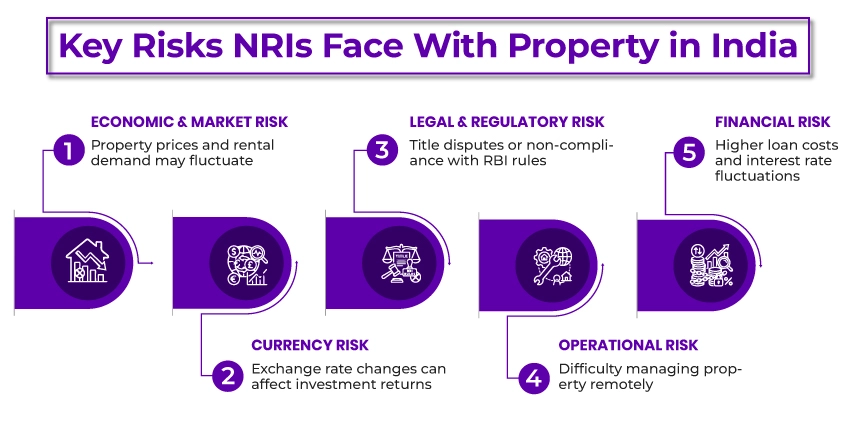
Yes, investing in a property in India does offer potential for financial growth. However, it is essential to understand the risks associated with such investments so that you don't end up falling into the trap.
Savetaxs NRI tax experts handle the entire ITR filing process with zero hassles.
As aforementioned, investing in a property as an NRI offers promising opportunities; however, it does come with its own set of risks. Hence, let us explore some practical approaches to eliminate the risks associated with NRI property investments in India.
The following are some property fraud prevention strategies that an NRI must know to ensure their property is protected against all threats.
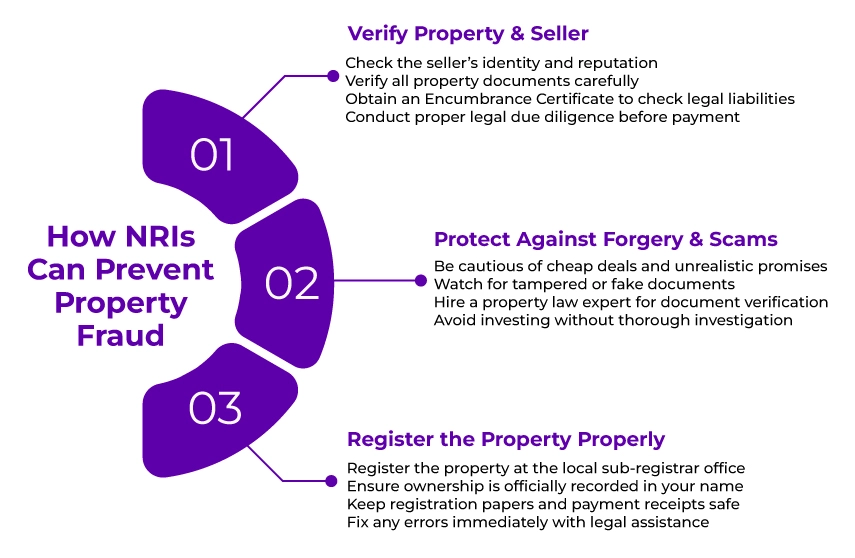
As an NRI, before investing in a property, you should verify the seller's identity and reputation. As they question around the property, check the reviews, consult the real estate professionals, and yes, do not trust any documents at face value. Review each and every document carefully and look for any missing information or errors. When it comes to verifying the docmes it is best to seek help from a professional.
Another step is to obtain an encumbrance certificate, which confirms that the property is free of any legal or financial liabilities. Furthermore, it provides the details of past transactions related to the property and helps to detect any outstanding disputes or loans.
As an NRI, another thing to keep in mind is that you should never make any payments until you have thoroughly reviewed all the documents with legal due diligence. NRI stay a step ahead before you invest in any property in India, taking a little caution now can save you from big trouble later.
For NRIs, some of the biggest scams and threats in the real estate,arker are property grabbing and document forgery. This happens a lot, especially when you're not physically present or able to evaluate, yet everything is face-to-face. To protect yourself from these scammers, hire a legal expert with expertise in property law. These experts will scan the prepry inside out, along with the associated priery documents, and will tell you about any potential flaws.
Fancy claims, tampered documents, forgery, and cheap deals, all of this could be a rap; avoid falling into one.
Once the property is purchased, get it registered under your name. This is an important step to make your ownership of the property official. Get the property registered with the local sub-register's office as soon as you have finalized the payment.
To keep everything in order, keep all the registration documents, payment receipts, and any other communications regarding the deal safe with you.
If you notice any mistakes or issues during the registration process, have a word with the legal advisor and get them fixed immediately.
A Power of Attorney is a legal document that authorizes an individual (the attorney-in-fact or agent) to act on behalf of the principal in his/her financial matters. Regarding property management, the PoA means the agent can buy, sell, lease, or manage property on your behalf (principal).
The power of attorney for NRI property in India is a crucial requirement when the property owner lives abroad, is ill, elderly, or unable to personally carry out the legal formalities.
For NRIs, a PoA is an essential tool for the practical management of property, financial, and legal affairs in India. It helps eliminate the need for NRIs to constantly travel back to India to handle the following:
Professional oversight significantly reduces risk. Property management services for NRIs in India handle property maintenance, inspections, tenant coordination, and compliance on their behalf.
For rented properties, proper rent management is crucial. This furthermore includes.
When NRIs seek professional management services, it ensures income stability and prevents long-term misuse.
Savetaxs investment experts help you choose smarter investment options in India.
When investing in a property in India, it is important to understand the tax implications and repatriation rules for NRIs. The following are some NRI income tax implications and repatriation rules for NRIs in India.
While making any real estate investment in India, NRIs often end up asking, "How to protect Indian property as an NRI?" Well, to protect your Indian property as an NRI, due diligence is essential. This includes carefully researching properties if you are looking to invest in Indian real estate, evaluating the property's financial and legal aspects, and thoroughly reviewing each document to mitigate risks and make a well-informed investment decision.
Furthermore, engaging a legal, tax, and real estate professional can make your entire process smooth, ensuring the professional's expertise helps an NRI navigate the complexities with ease. So if you are an NRI looking to invest in Idnia but are worried about the associated NRI investment risk, connect with Savetaxs. Savetaxs has been helping NRIs across 90+ countries manage their investment portfolios in India.
Our experts will consult with you on in-depth market analyses, managing tenant relations, property maintenance, legal compliance, and financial transactions to ensure 100% compliance.
Connect with us as we serve our clients 24/7 across all time zones.
Note: This guide is for information purposes only. The views expressed in this guide are personal and do not constitute the views of Savetaxs. Savetaxs or the author will not be responsible for any direct or indirect loss incurred by the reader for taking any decision based on the information or the contents. It is advisable to consult either a CA, CS, CPA or a professional tax expert from the Savetaxs team, as they are familiar with the current regulations and help you make accurate decisions and maintain accuracy throughout the whole process.

Mr Varun is a tax expert with over 13 years of experience in US taxation, accounting, bookkeeping, and payroll. Mr Gupta has not prepared and reviewed over 5000 individual and corporate tax returns for CPA firms and businesses.
Want to read more? Explore Blogs

_1767789828.png&w=828&q=75)