Over the last few years, for NRIs who want to expand their investment portfolio, the luxury real estate market of India has become a popular destination. Beyond being a profitable financial option, it helps NRIs to stay connected to their roots while enjoying long-term appreciation and amenities.
Additionally, investing in the luxury real estate market helps NRIs diversify their portfolios and earn returns. Considering this, today, the luxury real estate market of India for NRIs is a ripe investment opportunity.
To know more about how the Indian luxury real estate helps NRIs in diversifying their investment, read the blog and resolve all your queries.
Key Takeaways
- Backed by infrastructure development, rising aspirations, and increasing demand of NRIs, the Indian luxury real estate market is growing rapidly.
- Luxury real estate for NRIs is an asset that provides both emotional and financial returns.
- Additionally, diversifying the luxury real estate portfolio by investing in residential, commercial, and mixed-use developments helps NRIs in minimizing risk and maximizing returns.
- To invest in the luxury real estate market of India, NRIs have several financial options, such as home loans, overseas funding, and more.
- Further, to avoid unnecessary delays, it is vital for NRIs to understand the legal framework associated with Indian real estate.
Understanding the Luxury Real Estate Market in India
Driven by increasing demand from NRIs, infrastructure development, and rising aspirations, the luxury real estate market of India is growing at a remarkable pace. To make an informed decision, it is vital to understand the Indian real estate market. Here is how you can do so:
Current Market Trends and Statistics
Study the current market trends and statistics of the luxury real estate market in India:
- Steady Growth: Industry reports estimate that the Indian luxury housing market is expected to grow at a CAGR of around 8–10% between 2023 and 2028, driven by rising incomes and lifestyle preferences.. It is because there is a rise in disposable income and individual preferences shifted towards luxury living.
- High NRI Participation: In key Indian cities, the luxury real estate buyers are NRIs.
- Preference for Townships: Among buyers, the integrated townships that provide a combination of lifestyle, residential, and commercial spaces are gaining popularity.
Best Locations for Luxury Investments
The best locations for luxury investments in India include:
- Delhi NCR: South Delhi and Gurgaon are popular for ultra-luxury residencies and gated communities. Considering this, for high-net-worth individuals, these places are hotspots.
- Mumbai: The financial capital of India consists of iconic locations like Juhu, Pali Hill, and Bandra. These are high-value properties that come with sea views.
- Bangalore: In Bangalore, tech hubs like Indiranagar and Whitefield have exclusive gated developments and modern villas.
- Emerging Markets: Ahmedabad, Pune, and Hyderabad are gaining traction for their infrastructure and affordability growth.
Factors Driving Luxury Real Estate Demand Among NRIs
Here are the factors that drive luxury real estate demand among NRIs:
- Emotional Connection: The key reason for many NRIs to invest in the real estate market of India is to stay connected to their roots. Additionally, to have a base for family visits.
- Exclusive Amenities: State-of-the-art facilities like concierge services, private pools, and luxury interiors attract several buyers.
- Favourable Exchange Rates: The Indian currency depreciation makes the real estate more competitive for NRIs earning foreign income.
- High ROI Potential: Compared to mid-segment houses, the value of luxury properties increases faster. Hence, they offer long-term, lucrative returns.
So, this was all about the luxury real estate market and the factors you need to consider while investing in it. Moving ahead, let's know the benefits of investing in this.
Benefits of Investing in Indian Luxury Real Estate for NRIs
Luxury real estate in India offers both emotional and financial returns to NRIs. Considering this, here are the key benefits for NRIs investing in Indian luxury real estate.
Return on Investment (ROI)
As mentioned above, the luxury real estate market of India offers a higher return on investment (ROI) to buyers. Here is how:
- In selected locations, the demand for luxury real estate is more than its availability. Considering this, the resale value of the luxury properties is higher.
- Historically, luxury properties in prime micro-markets of Mumbai have shown long-term appreciation in the range of 6–10%, depending on market conditions.
- For high-end properties, every year, the rental income is 4 to 5%. It is more than your other fixed-income instruments.
Tax Benefits
Tax benefits in luxury real estate properties include:
- Home Loan Exemptions: Under Section 24(b) of the Income Tax Act, NRIs are eligible to claim tax deductions on the paid interest for home loans.
- Capital Gains: Under section 54, investments reinvested in specified bonds or assets help NRIs in saving tax on capital gains.
These are some of the benefits that NRIs have when investing in the luxury real estate market of India. Moving further, let's know the key considerations for building a diversified portfolio.
Key Considerations for Building a Diversified Portfolio
Having a diversified luxury real estate portfolio helps you in maximizing your returns and minimizing risk. Considering this, NRIs can also benefit from it by spreading their investment in different property types and locations. Confused? Here is how they can do so.
Location and Property Type Diversification
Location and property type diversification includes:
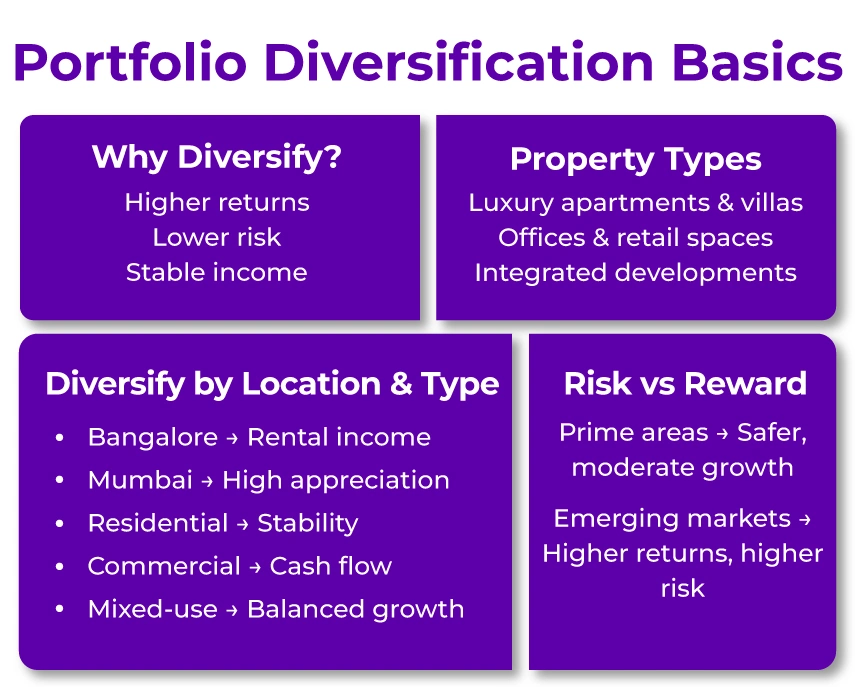
- Geographic Spread: Investing in several India citities provides you with exposure to different real estate markets. For instance, in Bangalore, due to the tech industry, you get consistent rental income, while in Mumbai, you receive high capital appreciation.
- Variety in Property Types: Balancing your investments in commercial, residential, and mixed-use properties provides you with long-term growth and steady income. With residential properties, you receive personal and emotional value, and commercial properties offer you with higher rental income.
Residential, Commercial, and Mixed Use Properties
Residential, commercial, and mixed-use properties in luxury real estate include:
- Residential Properties: Luxury villas and apartments are available for end users. Considering this, for long-term capital appreciation, these are stable investment information.
- Commercial Properties: In prime business locations, renal units and office spaces attract several tenants and offer constant cash flow.
- Mixed-use Developments: It combines residential, office spaces, and rental properties. The combination of them creates dynamic spaces that attract both investors and tenants.
Risks vs Reward in Luxury Real Estate Investments
The risks and rewards in luxury real estate investments include the following:
- Risk: The properties located in prime locations offer stability but are less volatile. In contrast, the high-end properties located in emerging markets offer higher returns, but have more risk.
- Reward: Upcoming development projects, assessing local infrastructure, and economic trends tend to maximize returns and potential growth.
These are some of the key considerations for building a diversified real estate portfolio in India. Apart from this, understanding market cycles and your investment timings can also impact your returns. For example, during a buyer's market, purchasing property often offers you favourable pricing.
Now, moving ahead, let's know about the financing options for NRIs in the luxury real estate market in India.
Financing Options for NRIs in Luxury Real Estate
There are several financing options for NRIs investing in the luxury real estate market of India. Knowing about these options ensures a cost-effective and smooth investment.
NRI Home Loans
To invest in real estate, Indian banks like HDFC, SBI, and ICICI offer NRI-specific home loan solutions:
- Eligibility Criteria: To obtain a loan, NRIs should provide income proof, property documents, and NRI status proof.
- Loan Amount: With a flexible tenure of 10 to 25 years, Indian banks finance up to 80% of the property amount.
- Repayment Terms: As per FEMA guidelines, loan repayments using NRO or NRE accounts should be made in Indian Rupees.
Currency and Financial Implications
Currency and financial implications include:
- Exchange Rate Optimisation: To save a good amount, make the investment during a favorable exchange rates
- Currency Hedging: By locking in rates through financial instruments, NRIs can hedge currency risk.
Other Financing Options
Other financial options include:
- Overseas Funding: Explore funding from overseas banks operating in India.
- Collateral-Based Loans: To get funds faster, use your current assets as collateral security.
- Joint Loans: To simplify the process and share the loan burden, by being a partner with family members in India apply for a joint loan.
So, this was all about the financing options for NRIs available in luxury real estate. Moving further, let's know the legal and regulatory framework that NRIs need to follow while investing in Indian real estate.
Legal and Regulatory Framework
For NRIs investing in Indian real estate to avoid unnecessary hassles and delays, it is vital to understand the legal framework.
NRI Investment Regulations
NRI investment regulations include:
- FEMA: According to the Foreign Exchange Management Act, NRIs are allowed to purchase residential and commercial properties in India. However, they are not allowed to buy agricultural land, farmhouses, or any type of plantation property.
- Title Verification: Ensure your investment property has a clear title and is dispute-free.
Documents and Permissions
Documents and permission include:
- Essential Documents: NRI status proof (visa, passport, or OCI card), PAN card, and Power of Attorney (PoA) if someone else is managing the transaction on behalf of the NRI.
- RERA Registration: To ensure legitimacy and transparency, always check that the project is registered under RERA.
Taxation and Repartition
Taxation and repatriation rules include:
- Rental Income and Sale Proceeds: As per the RBI guidelines, if applicable taxes are paid, NRIs can repatriate rental income and sale proceeds.
- Capital Gains Tax: Under section 54 of the Income Tax Act, by investing in specific properties and bonds, NRIs can reduce or exempt long-term capital gains tax.
This was all about the legal and regulatory framework that NRIs need to consider while investing in Indian luxury real estate. Moving ahead, let's look at the strategies for successful investment in the real estate market.
Strategies for Successful Investment
To have a successful investment in the luxury real estate investment in India, it is vital for NRIs to do research and proper planning. Here are some strategies for successful investment in India for NRIs:
- Evaluate Properties and Developers: Invest in emerging or established luxury areas that have growth potential. Additionally, opt for the developers who deliver projects on time.
- Stay Informed: Have information about government policies, infrastructure developments, and real estate trends to early know the real estate hotspots.
- Diversify Property Types: To balance both risk and reward, invest in residential houses, commercial properties, and mixed-use developments.
- Work with Professionals: Make a local team of investment experts, including financial advisors, real estate agents, and lawyers, to make informed decisions and smooth transactions.
Implementing these strategies during your real estate investment will surely help in making informed decisions and maximizing your returns.
24/7 Online NRI Investment Services
Connect with Savetaxs and choose the right investment plan as per your financial goals and preferences. We provide end-to-end expert assistance across all time zones.
Final Thoughts
Lastly, for NRIs, investing in Indian luxury real estate is not only a normal investment but also an emotional connection to their roots and long-term financial security. With tax benefits, assured returns, and access to luxury amenities, the Indian luxury real estate market is open for discovery. However, managing all these alone can be a hectic process for NRIs.
Considering this, hiring an experienced legal professional like Savetaxs can help you in easily managing the complex process. Additionally, with years of experience in the investment field, the experts in our team ensure the smooth transaction execution, minimizing the risk of fraud or disputes.

_1766396437.webp&w=828&q=75)
_1772530929420.png&w=3840&q=75)

_1766492717.png&w=828&q=75)
_1766561286.webp&w=828&q=75)

_1766561266.webp&w=828&q=75)